
Fluency + Interest: Financial Roles in a Family
March 27, 2026 - A financial plan can look perfect on paper and still fail in real life if it ignores how a household actually operates. Two people can love each other, share values, and still get stuck around money—not because they’re “bad with finances,” but because they have different levels of fluency and interest.
Fluency is capability: how comfortable you are understanding financial decisions, tradeoffs, and consequences. Interest is engagement: how much you want to be involved. Put those together and you get a simple model that explains a lot of household dynamics—especially when you pair it with money personality. Low fluency and low interest is not a negative. It may just mean someone is fluent and interested in other things. Wherever you are on this scale, own it, but plan around it.
Here is a simple X–Y graph from 0 to 10 where you can both plot where you stand.
Fluency on one axis (0 = not comfortable, 10 = very capable)
Interest on the other (0 = don’t want to engage, 10 = enjoy engaging)
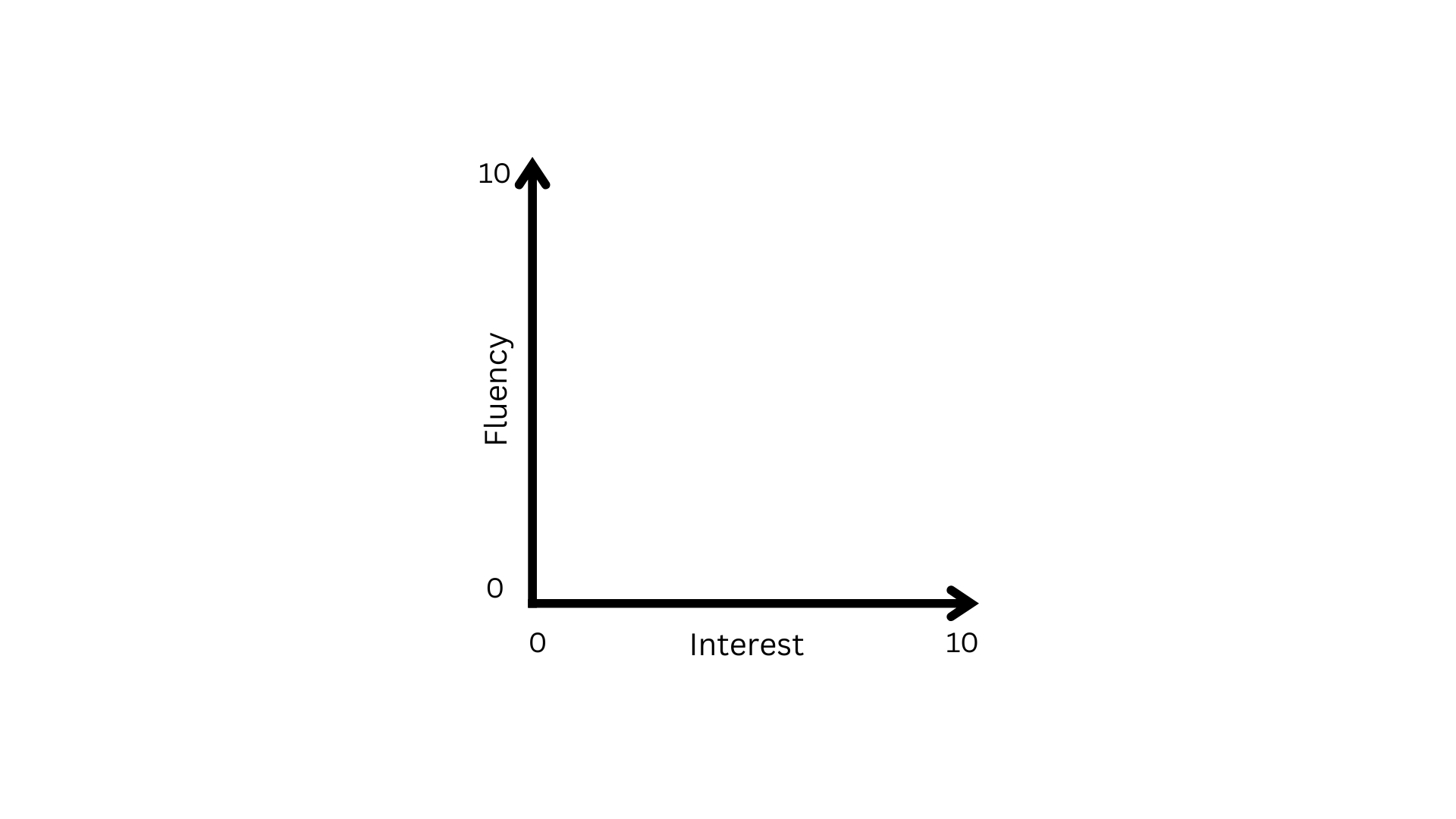
Where you land on that graph matters. Where your spouse lands matters, too. And the gap between the two can predict tension or avoidance. It also can be a tool for understanding how to divide roles successfully.
Why this matters alongside money personality
Money personality is the why—the emotional driver behind financial decisions (security, freedom, family, progress, recognition, and so on). Fluency and interest are the how—who engages, who executes, and who carries the load.
A useful plan respects both:
Money personality helps you understand motives and friction points.
Fluency + interest helps you design roles, communication, and decision rules that actually work.
Some common quadrants
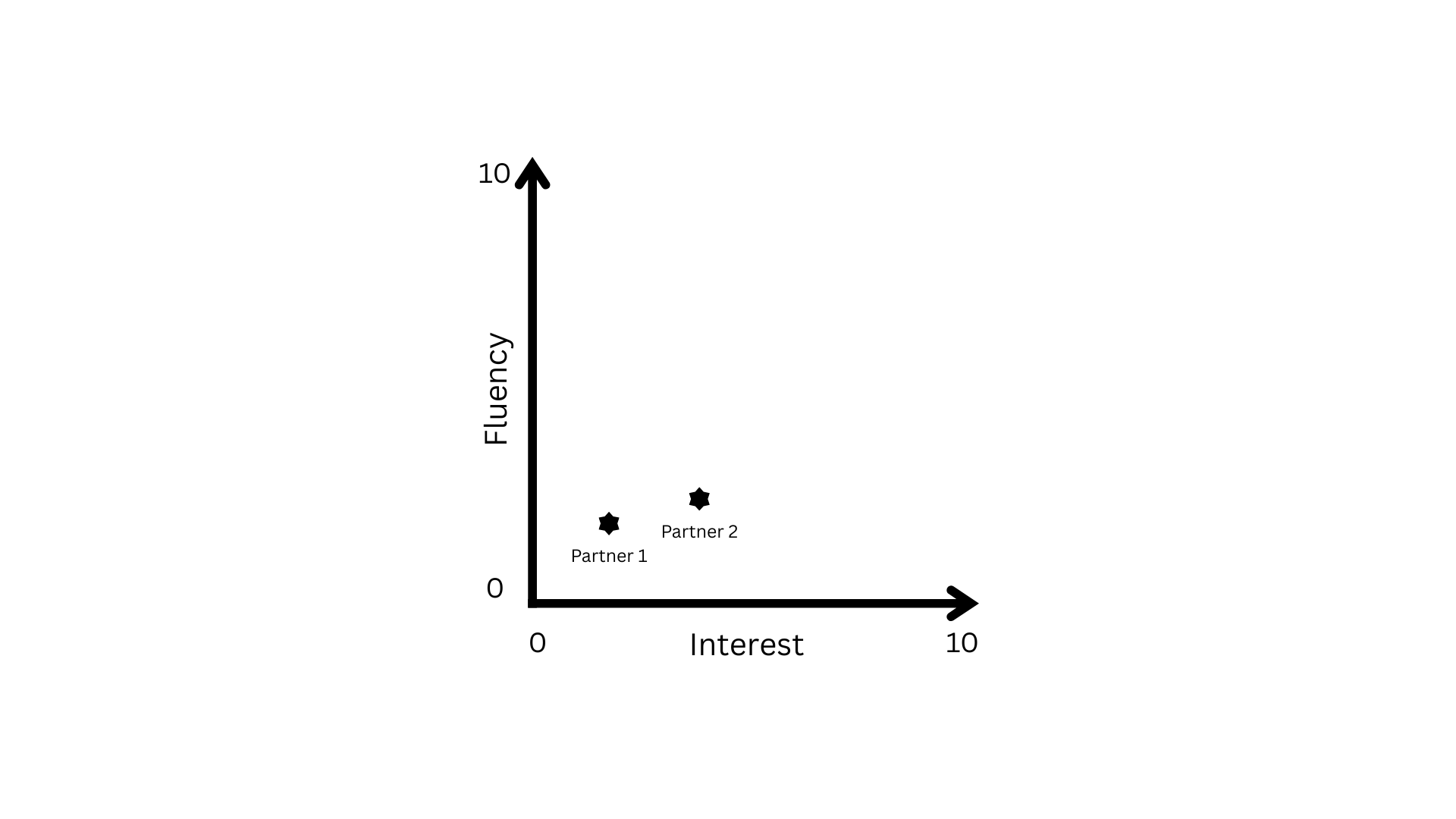
1) Low fluency + low interest: harmony… with hidden risk
Two people can be in genuine harmony here. “We don’t worry about money. We’ll figure it out.” That can feel peaceful in the short run.
It can also be risky—because important decisions still exist: taxes, insurance, estate planning, debt, investment risk, and retirement timing. If no one is driving, circumstances drive for you.
Planning implications may include keeping it simple and automated, and bringing in an outside structure (a trusted advisor, a system, a process).
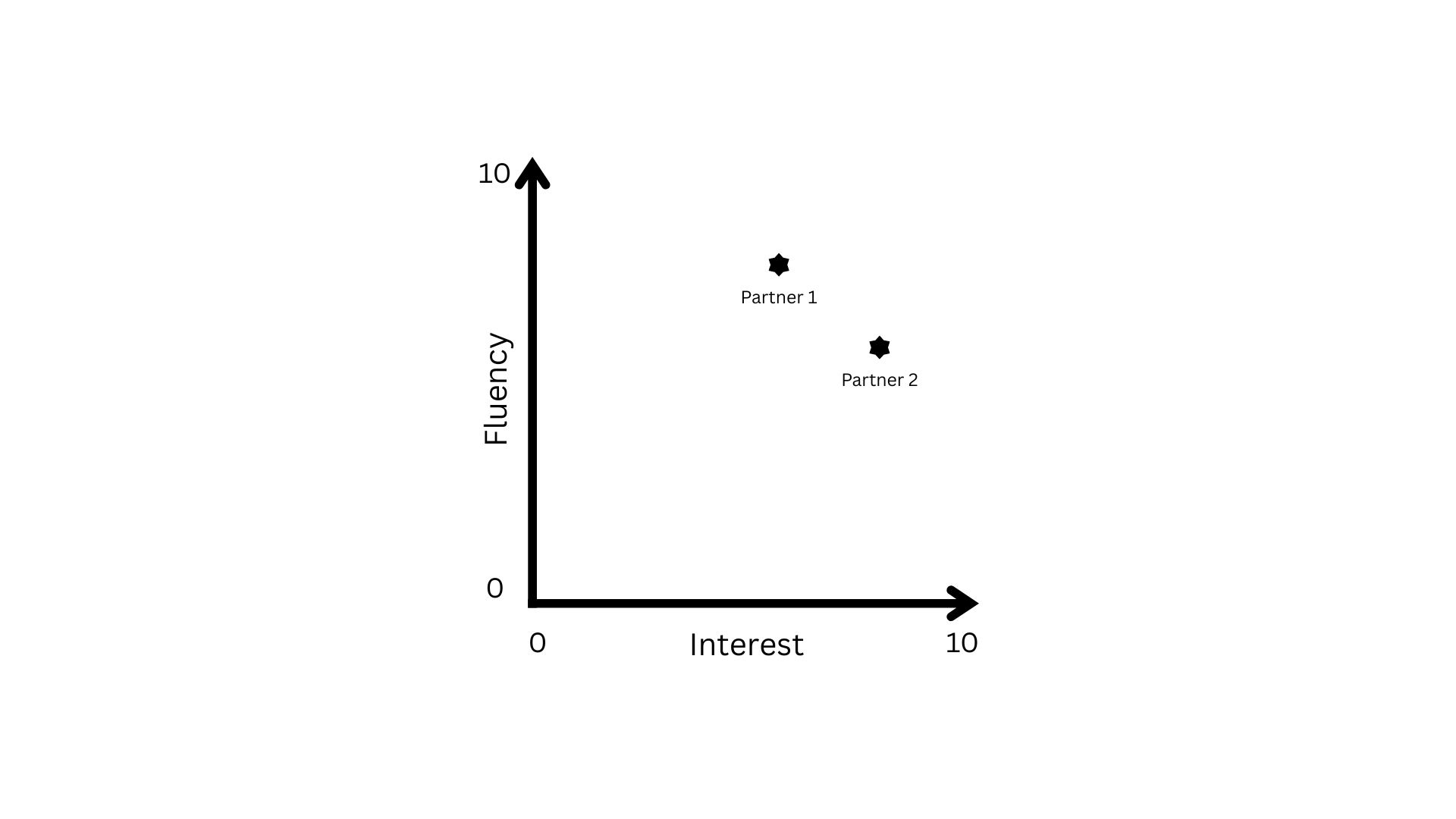
2) High fluency + high interest: two engaged partners
This is often the easiest quadrant for building a thoughtful plan. Both people understand the moving pieces, and both want to engage. This does not guarantee agreement. Two engaged people can still disagree on risk, spending, or generosity. Disagreement here is usually workable because both parties can discuss tradeoffs without feeling lost.
Planning implications may include splitting responsibilities intentionally (one handles cash flow, one handles investing, both review), and using professionals to fill the gaps, especially as complexity and net worth increases. This is a scenario where a high degree of confidence can lead to making mistakes when “we don’t know what we don’t know.”
When couples differ
In many marriages, one person becomes the financial point person—the household lead who organizes, decides, and executes the plan. That role can form naturally when one spouse has higher fluency and higher interest.
That can be healthy, but it can also drift into an unhelpful pattern: “My spouse handles all the money, so I don’t worry about it.” Sometimes that is simply the division of responsibilities, and other times it is quiet disengagement. Occasionally it’s not disinterest at all—it’s conflict avoidance: “I don’t want to argue, so I’ll just step back.” Because the quieter spouse may not be unmotivated—they may feel unheard, overwhelmed, or steamrolled.
A common solution: one lead, two informed adults
A strong household system often looks like:
One person is the lead (the point person)
Both people are appropriately informed
Both people have a voice in major decisions
Not equal labor—appropriately shared ownership.
Practical ways to improve the dynamic
Name the roles out loud. “You’re the point person. I’m not passive—I’m participating differently.”
Define what requires two “yes” votes. Examples: large purchases, changes to investing risk, helping family, charitable gifts.
Cash Freedom Model - A practical way many couples approach the nuts and bolts of daily financial decisions is our cash freedom model. Sometimes it is constructive for the more fluent and interested partner to handle big picture items while the less fluent, less interested partner manages the daily cash flow.
What if I am single, divorced, or widowed?
If you are managing money on your own, the same framework applies. You still sit somewhere on the fluency and interest chart, and that reality should shape how you approach money. If you are highly fluent and highly interested, you may be able to run a thoughtful plan with a simple structure and periodic checkpoints. If you are less fluent, less interested, or both, you do not need to become a different person in order to be financially secure. Many people can build fluency over time, which can be worthwhile, but it may be more constructive to own where you are today and fill in the gaps with trusted outside support. Get help from someone who IS fluent and interested, will speak truth to you, and does not have an ulterior motive. (Our Conflict of Interest article may be helpful).
What to do today
Draw the graph. Rate yourself 0–10 on fluency and 0–10 on interest, then ask your spouse to do the same. Listen and see where the conversation leads you.
If you want help designing a plan that fits your financial personality and your fluency/interest dynamic, let’s schedule a call.
-
Information presented is for educational purposes only and is not personalized investment, financial, legal, tax, or accounting advice. Nothing on this website should be interpreted to state or imply that past performance is an indication of future performance. All investments involve risk and unless otherwise stated are not guaranteed. Be sure to consult with tax, legal, accounting, and financial professionals about your specific situation before implementing any planning strategies. Investment Advisory Services offered through Timberchase Financial, LLC, a Registered Investment Adviser with the U.S. Securities & Exchange Commission. Registration does not imply a certain level of skill or training.